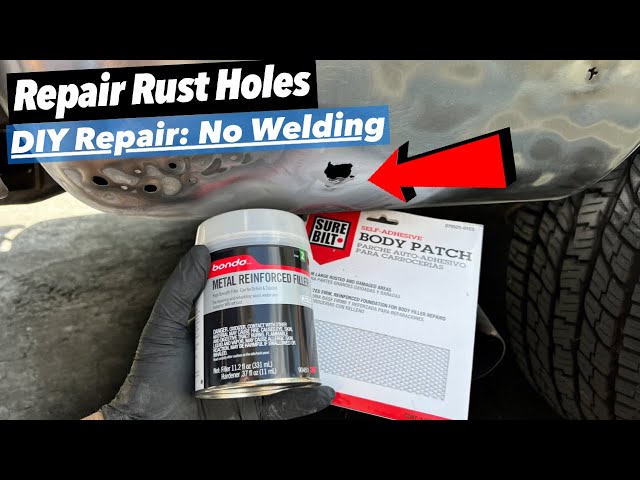
How To Repair Rust Holes On A Car

Rust is a common problem for cars, especially in areas with high humidity or salt exposure. Rust can cause holes in the body of the car, which can lead to further damage and even structural problems. Repairing rust holes is important to maintain the integrity of the car and prevent further damage.
There are a few different ways to repair rust holes on a car. One method is to use a rust converter. Rust converters are chemicals that convert rust into a stable compound that will not continue to spread. Once the rust has been converted, the hole can be filled with a body filler and sanded smooth.
Another method for repairing rust holes is to weld in a new piece of metal. This is a more permanent solution than using a rust converter, but it is also more difficult and requires specialized equipment. If the rust hole is large, it may be necessary to weld in a new panel.
No matter which method you choose, it is important to clean the area around the rust hole thoroughly before beginning repairs. This will help to prevent the spread of rust and ensure that the repair is successful.
How to Repair Rust Holes on a Car
Rust holes are a common problem for cars, especially in areas with high humidity or salt exposure. Rust can cause holes in the body of the car, which can lead to further damage and even structural problems. Repairing rust holes is important to maintain the integrity of the car and prevent further damage.
- Identify the Rust: The first step in repairing rust holes is to identify the location and extent of the damage. This can be done by visually inspecting the car's body for any signs of rust, such as bubbling paint, flaking metal, or holes.
- Remove the Rust: Once the rust has been identified, it is important to remove it completely. This can be done using a wire brush, sandpaper, or a chemical rust remover. It is important to remove all of the rust, as any remaining rust will continue to spread and cause damage.
- Clean the Area: Once the rust has been removed, the area around the hole should be cleaned thoroughly. This will help to remove any dirt or debris that could interfere with the repair.
- Fill the Hole: The next step is to fill the hole with a body filler. Body filler is a type of putty that is used to repair holes and dents in car bodies. It is important to use a body filler that is specifically designed for automotive use.
- Sand the Filler: Once the body filler has been applied, it should be sanded smooth. This will help to create a smooth surface that is ready to be painted.
- Paint the Area: The final step is to paint the repaired area. It is important to use a paint that is specifically designed for automotive use. The paint should be applied in several thin coats, allowing each coat to dry completely before applying the next.
By following these steps, you can repair rust holes on your car and prevent further damage. Rust repair is an important part of car maintenance, and it can help to keep your car looking its best and running its best.
Identify the Rust
Identifying the rust is a crucial step in repairing rust holes on a car because it allows you to assess the severity of the damage and determine the best course of action. By visually inspecting the car's body, you can identify the location and extent of the rust, which will help you determine the appropriate repair method.
For example, if the rust is only superficial and has not penetrated the metal, you may be able to repair it using a rust converter or a body filler. However, if the rust has penetrated the metal, you may need to weld in a new piece of metal to repair the hole.
In some cases, the rust may be so extensive that it is not possible to repair the car. In these cases, it may be necessary to replace the entire body panel or even the entire car.
By identifying the rust early on, you can prevent it from spreading and causing further damage to your car. This will help to extend the life of your car and keep it looking its best.
Remove the Rust
Rust is the result of iron oxidation, which is a chemical process that occurs when iron comes into contact with oxygen and moisture. Rust is a major problem for cars, as it can lead to holes in the body of the car, which can weaken the car's structure and make it unsafe to drive.
Removing rust is an important step in repairing rust holes on a car. If the rust is not removed completely, it will continue to spread and cause further damage. There are a few different methods that can be used to remove rust, including:
- Wire brush: A wire brush can be used to remove loose rust and scale. It is important to use a wire brush that is made of stainless steel, as other types of wire brushes can rust and contaminate the metal.
- Sandpaper: Sandpaper can be used to remove rust from flat surfaces. It is important to use a sandpaper that is fine enough to remove the rust without damaging the metal.
- Chemical rust remover: A chemical rust remover is a chemical solution that can be used to dissolve rust. Chemical rust removers are available in a variety of strengths, so it is important to choose a product that is appropriate for the severity of the rust.
Once the rust has been removed, it is important to clean the area with a degreaser to remove any remaining rust particles or contaminants. The area should then be primed and painted to protect it from future rust.
Clean the Area
Cleaning the area around the rust hole is an important step in the repair process, as it helps to ensure that the repair will be successful and long-lasting.
-
Title of Facet 1
Dirt and debris can interfere with the adhesion of the body filler, which could lead to the repair failing. Cleaning the area around the hole removes any dirt or debris that could prevent the body filler from adhering properly, ensuring a strong and durable repair.
-
Title of Facet 2
Dirt and debris can also trap moisture, which can lead to the formation of rust. By cleaning the area around the hole, you can remove any moisture that could cause rust to form, helping to prevent the repair from failing in the future.
-
Title of Facet 3
Cleaning the area around the hole also helps to ensure that the paint will adhere properly. Paint will not adhere to dirt or debris, so it is important to clean the area thoroughly before painting. This will help to ensure that the paint job is durable and long-lasting.
By following these steps, you can ensure that the repair will be successful and long-lasting.
Fill the Hole
Filling the hole is a crucial step in repairing rust holes on a car, as it helps to restore the structural integrity of the car's body and prevent further damage. Body filler is a type of putty that is specifically designed to repair holes and dents in car bodies. It is important to use a body filler that is specifically designed for automotive use, as other types of fillers may not be able to withstand the harsh conditions that cars are exposed to.
Once the hole has been filled, it is important to sand it smooth and even. This will help to ensure a smooth finish and prevent the body filler from cracking or peeling. Once the body filler has been sanded smooth, it can be primed and painted to match the rest of the car's body.
By following these steps, you can repair rust holes on your car and prevent further damage. Rust repair is an important part of car maintenance, and it can help to keep your car looking its best and running its best.
Sand the Filler
Sanding the filler is a crucial step in repairing rust holes on a car, as it helps to ensure a smooth and durable repair. Body filler is a type of putty that is used to fill holes and dents in car bodies. It is important to sand the body filler smooth once it has been applied, as this will help to create a smooth surface that is ready to be painted. If the body filler is not sanded smooth, it may be visible once the car is painted, and it may also be more likely to crack or peel.
To sand the body filler, you will need to use sandpaper. Start with a coarse sandpaper, such as 80-grit sandpaper, and then gradually move to a finer sandpaper, such as 220-grit sandpaper. Be sure to sand the body filler in a circular motion, and avoid sanding too aggressively, as this could damage the metal. Once the body filler is sanded smooth, you can prime and paint the repaired area.
By following these steps, you can ensure that the repair will be smooth and durable. Rust repair is an important part of car maintenance, and it can help to keep your car looking its best and running its best.
Paint the Area
Painting the repaired area is a crucial step in repairing rust holes on a car, as it helps to protect the repaired area from further damage and corrosion.
- Automotive paint is specially formulated to withstand the harsh conditions that cars are exposed to, such as UV rays, rain, and road salt. Using a paint that is not specifically designed for automotive use could lead to the paint fading, peeling, or chipping prematurely.
- Applying the paint in several thin coats allows each coat to dry completely before the next coat is applied. This helps to ensure that the paint adheres properly to the repaired area and provides a smooth, durable finish.
By following these steps, you can ensure that the repaired area is protected from further damage and corrosion, and that the paint job is durable and long-lasting.
FAQs about How to Repair Rust Holes on a Car
Rust holes are a common problem for cars, especially in areas with high humidity or salt exposure. Rust can cause holes in the body of the car, which can lead to further damage and even structural problems. Repairing rust holes is important to maintain the integrity of the car and prevent further damage.
Question 1: What are the different methods for repairing rust holes?
There are two main methods for repairing rust holes: using a rust converter or welding in a new piece of metal. Rust converters are chemicals that convert rust into a stable compound that will not continue to spread. Welding in a new piece of metal is a more permanent solution, but it is also more difficult and requires specialized equipment.
Question 2: How do I identify rust holes?
Rust holes can be identified by visually inspecting the car's body for any signs of rust, such as bubbling paint, flaking metal, or holes. It is important to identify rust holes early on, as this will help to prevent the spread of rust and further damage.
Question 3: How do I remove rust?
Rust can be removed using a wire brush, sandpaper, or a chemical rust remover. It is important to remove all of the rust, as any remaining rust will continue to spread and cause damage.
Question 4: How do I fill a rust hole?
Rust holes can be filled with a body filler. Body filler is a type of putty that is used to repair holes and dents in car bodies. It is important to use a body filler that is specifically designed for automotive use.
Question 5: How do I paint the repaired area?
The repaired area should be painted using a paint that is specifically designed for automotive use. The paint should be applied in several thin coats, allowing each coat to dry completely before applying the next.
Question 6: How can I prevent rust from forming in the future?
There are a few things that you can do to prevent rust from forming in the future, such as:
- Washing your car regularly
- Waxing your car regularly
- Applying a rust-resistant coating to your car
- Storing your car in a dry place
By following these tips, you can help to prevent rust from forming on your car and keep it looking its best.
Summary of key takeaways or final thought:
Rust holes are a common problem for cars, but they can be repaired using a few simple steps. By following the tips in this article, you can repair rust holes on your car and prevent further damage.
Transition to the next article section:
Now that you know how to repair rust holes on your car, you can keep your car looking its best and running its best for years to come.
Tips for Repairing Rust Holes on a Car
Rust holes are a common problem for cars, especially in areas with high humidity or salt exposure. Rust can cause holes in the body of the car, which can lead to further damage and even structural problems. Repairing rust holes is important to maintain the integrity of the car and prevent further damage.
Here are five tips for repairing rust holes on a car:
Tip 1: Identify the RustThe first step in repairing rust holes is to identify the location and extent of the damage. This can be done by visually inspecting the car's body for any signs of rust, such as bubbling paint, flaking metal, or holes.
Tip 2: Remove the Rust
Once the rust has been identified, it is important to remove it completely. This can be done using a wire brush, sandpaper, or a chemical rust remover. It is important to remove all of the rust, as any remaining rust will continue to spread and cause damage.
Tip 3: Clean the Area
Once the rust has been removed, the area around the hole should be cleaned thoroughly. This will help to remove any dirt or debris that could interfere with the repair.
Tip 4: Fill the Hole
The next step is to fill the hole with a body filler. Body filler is a type of putty that is used to repair holes and dents in car bodies. It is important to use a body filler that is specifically designed for automotive use.
Tip 5: Sand the Filler
Once the body filler has been applied, it should be sanded smooth. This will help to create a smooth surface that is ready to be painted.
Summary of key takeaways or benefits:
By following these tips, you can repair rust holes on your car and prevent further damage. Rust repair is an important part of car maintenance, and it can help to keep your car looking its best and running its best.
Transition to the article's conclusion:
Rust holes are a common problem, but they can be repaired with a little time and effort. By following the tips in this article, you can keep your car looking its best and running its best for years to come.
Conclusion
Rust holes are a common problem for cars, but they can be repaired with a little time and effort. By following the steps outlined in this article, you can repair rust holes on your car and prevent further damage. Rust repair is an important part of car maintenance, and it can help to keep your car looking its best and running its best for years to come.
If you are not comfortable repairing rust holes on your own, you can take your car to a mechanic. However, if you are willing to put in the time and effort, you can save money by repairing the rust holes yourself.
Youtube Video: